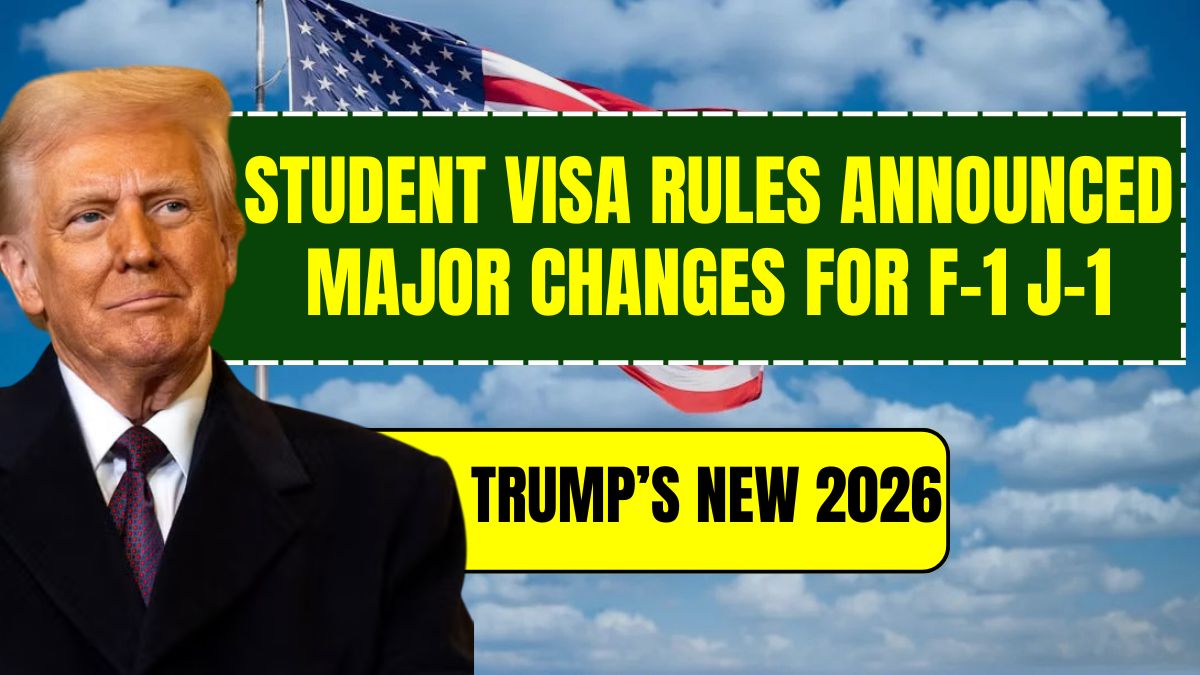
The United States has long been a dream destination for international students, offering world-class education, global exposure, and career opportunities that shape futures. However, immigration policies have always played a decisive role in determining how accessible that dream truly is. With the announcement of Trump’s new 2026 student visa rules, international students on F-1, J-1, and M-1 visas now find themselves at a turning point. These changes are being described as some of the most impactful reforms in recent years, prompting excitement, concern, and countless questions among students planning to study in the U.S.
The newly announced rules aim to reshape how student visas are issued, monitored, and extended. While officials argue that the reforms focus on transparency, national security, and academic accountability, many students and institutions are still trying to understand how these changes will affect real-life study plans. This article explains the new 2026 student visa rules in a clear, humanized way, helping students make sense of what lies ahead.
Why the 2026 Student Visa Changes Were Introduced
The Trump administration has consistently emphasized stricter immigration oversight, and the 2026 student visa reforms align closely with that broader vision. According to policy explanations, the government believes that student visa programs need tighter monitoring to prevent misuse while ensuring that genuine students continue to benefit from U.S. education.
Officials have pointed to concerns such as visa overstays, unauthorized employment, and prolonged stays without academic progress. By introducing updated guidelines for F-1, J-1, and M-1 visas, the administration aims to redefine the balance between welcoming international talent and enforcing compliance with immigration laws. These changes also reflect a push toward aligning education visas more closely with labor market needs and national interests.
Understanding the F-1 Visa Changes in 2026
The F-1 visa, which is the most common visa for international academic students, is seeing notable updates under the new rules. One of the most discussed changes involves stricter timelines for degree completion. Students may now be expected to complete their academic programs within a more clearly defined time frame, reducing the flexibility that previously allowed extended stays due to course changes or academic delays.
Another major focus is enhanced monitoring of academic performance. Universities and colleges will reportedly have increased responsibility to regularly report student progress. This means that maintaining full-time enrollment and satisfactory academic standing becomes even more critical than before. Students who fail to meet these expectations may face quicker visa reviews or status complications.
Additionally, practical training opportunities connected to F-1 visas, such as Optional Practical Training, are expected to face more structured oversight. While work experience remains a key benefit of studying in the U.S., students may need to demonstrate clearer links between their field of study and their training roles.
How J-1 Exchange Students Are Affected
The J-1 visa, designed for exchange visitors including students, researchers, and interns, is also undergoing important changes. The new 2026 rules emphasize the original purpose of cultural exchange, reinforcing the idea that J-1 participants should return home after completing their programs.
Under the updated framework, waiver approvals for the two-year home residency requirement may become more limited. This could significantly affect students and scholars who previously planned to transition from J-1 status to long-term employment or other visa categories within the U.S. The government appears keen on ensuring that exchange programs genuinely serve international cooperation rather than becoming indirect immigration pathways.
Institutions sponsoring J-1 programs may also face stricter compliance checks. This means students should expect more documentation requirements and closer communication with program sponsors throughout their stay in the United States.
M-1 Visa Rules: Vocational Students Under Closer Review
Students enrolled in vocational and technical programs under the M-1 visa category are not exempt from the 2026 changes. In fact, M-1 visas are seeing some of the strictest revisions. The new rules reportedly focus on limiting program extensions and ensuring that vocational studies remain short-term and skill-specific.
M-1 students may experience tighter restrictions on changing institutions or programs after arriving in the U.S. The intention behind this move is to prevent misuse of vocational visas for purposes outside their original scope. As a result, students considering M-1 programs must be especially careful when choosing their course and institution, as flexibility after arrival may be reduced.
Impact on New Applicants Planning to Study in the U.S.
For students planning to apply for U.S. study visas in 2026 and beyond, the new rules mean preparation will be more important than ever. Visa interviews may involve more detailed questions about academic goals, career plans, and intent to return home after studies. Applicants may also need stronger proof of financial stability and academic seriousness.
The application process itself is expected to remain familiar, but with heightened scrutiny. Even small inconsistencies in documents or unclear study plans could result in delays or denials. As a result, students are being encouraged to work closely with their institutions and ensure that all information provided is accurate and well-documented.
How Current Students in the U.S. Could Be Affected
Students already studying in the U.S. under F-1, J-1, or M-1 visas are understandably concerned about how the 2026 rules apply to them. While existing visa holders are not expected to lose status overnight, ongoing compliance will become increasingly important.
Maintaining full-time enrollment, avoiding unauthorized work, and following all reporting requirements will be critical. Students who were previously relying on flexibility in course loads or program timelines may need to reassess their academic strategies to align with the new expectations.
Universities and Institutions React to the New Rules
American universities and colleges play a central role in implementing student visa regulations, and many institutions are already adjusting their internal processes. International student offices are preparing to provide more guidance, conduct regular compliance checks, and assist students in navigating the updated rules.
Some institutions have expressed concern that stricter policies could discourage talented students from choosing the U.S. as their study destination. Others believe that clearer guidelines could bring long-term stability by setting realistic expectations from the beginning of a student’s academic journey.
Emotional and Practical Concerns Among International Students
Beyond legal and administrative changes, the emotional impact of the new student visa rules cannot be ignored. Many international students already face pressure related to finances, cultural adjustment, and academic performance. The added uncertainty surrounding visa compliance can increase stress and anxiety.
Students often invest years of planning and significant resources into studying in the U.S. Any change that affects their future naturally feels personal. Clear communication, institutional support, and proactive planning will be essential in helping students feel secure during this transition.
What Students Can Do to Stay Prepared
Although the new 2026 student visa rules introduce challenges, they also highlight the importance of being informed and proactive. Students should regularly communicate with their international student advisors, stay updated on official announcements, and carefully follow visa conditions.
Planning academic pathways realistically, avoiding unnecessary delays, and maintaining transparent records can make a significant difference. Students who treat their visa status as an ongoing responsibility rather than a one-time approval are more likely to adapt successfully to the changing landscape.
Conclusion: A Changing Landscape for U.S. Student Visas
Trump’s new 2026 student visa rules mark a significant shift in how the United States approaches international education and immigration. With major changes affecting F-1, J-1, and M-1 students, the message is clear: studying in the U.S. will continue to be an opportunity, but one that comes with stricter expectations and accountability.
For students willing to adapt, plan carefully, and stay compliant, the U.S. remains a powerful destination for education and growth. Understanding these changes early is the first step toward navigating them successfully and turning challenges into informed choices for the future.
FAQs
Q1: What are the new 2026 student visa rules announced by Trump?
A. The rules introduce stricter timelines, enhanced monitoring, and compliance requirements for F-1, J-1, and M-1 students studying in the U.S.
Q2: Which student visas are affected by these changes?
A. The F-1 (academic), J-1 (exchange), and M-1 (vocational) student visa categories are all affected.
Q3: How will F-1 students be impacted?
A. F-1 students must complete their programs within defined timelines, maintain full-time enrollment, and comply with stricter Optional Practical Training (OPT) rules.