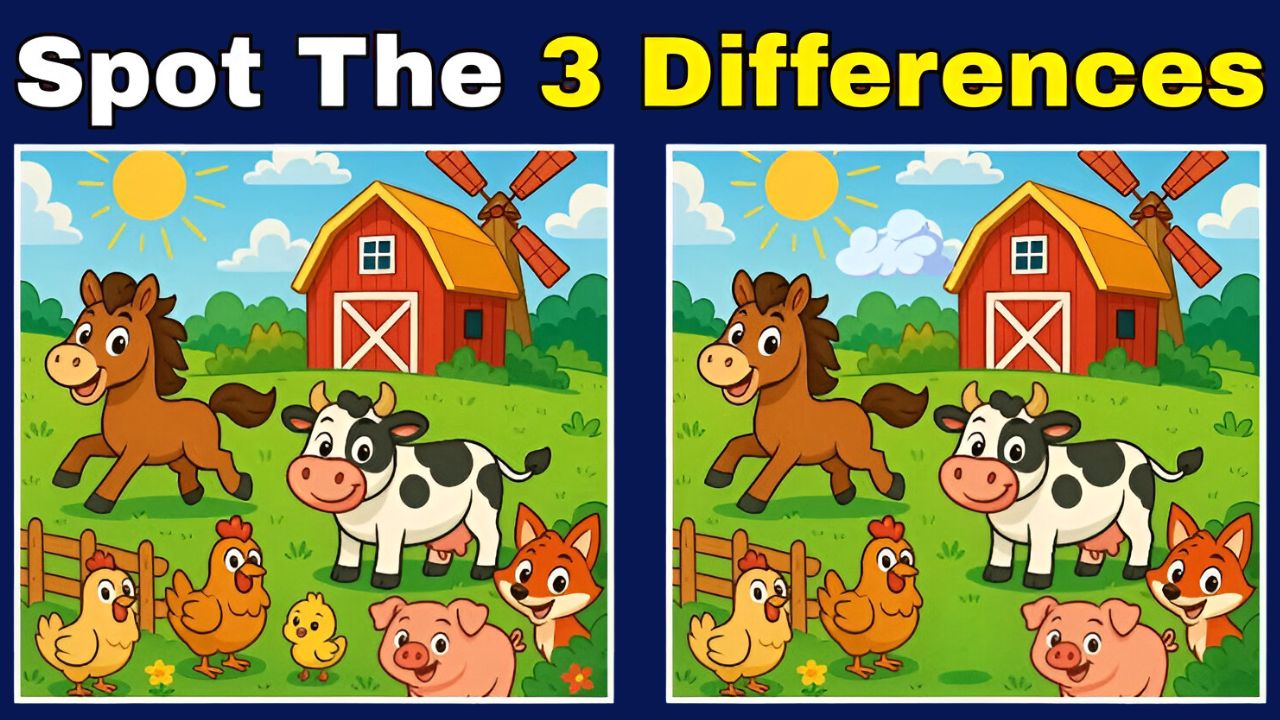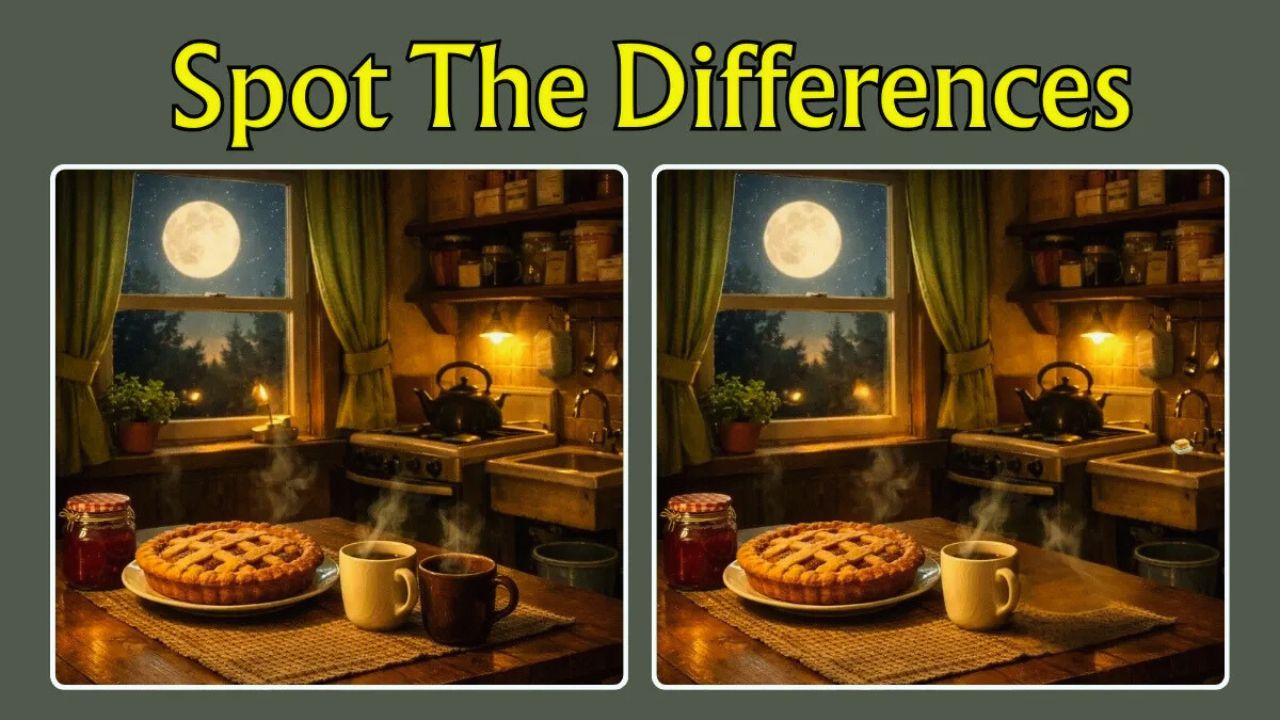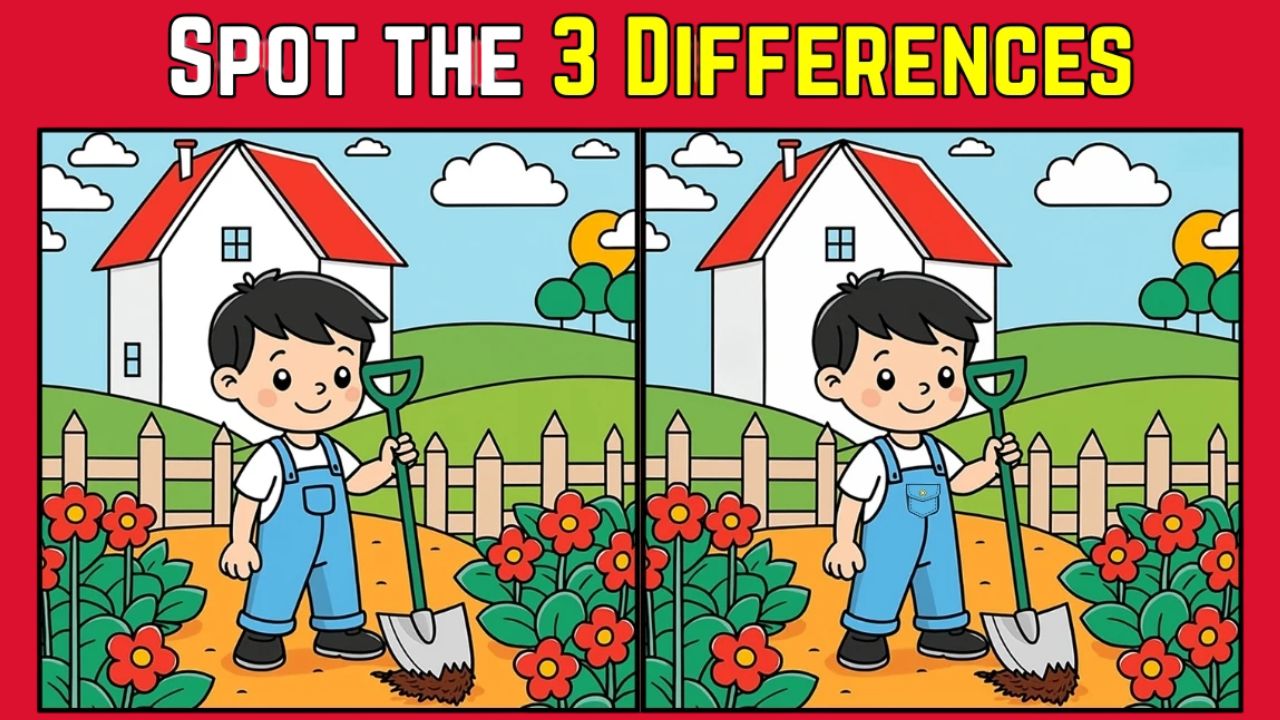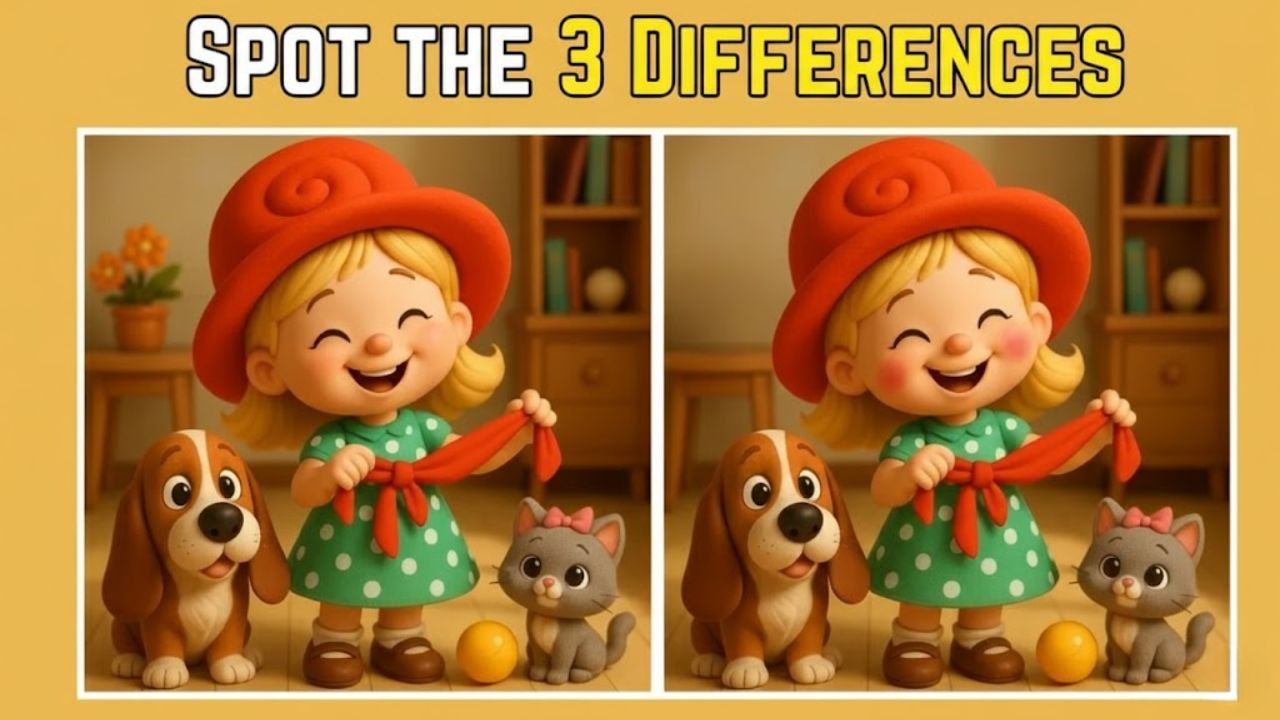
Spot the difference puzzles have always fascinated people. They look easy, but they can be surprisingly challenging, especially when you’re under time pressure. In this viral 12-second challenge, you have to find three very subtle differences between two almost identical images. At first glance, most people think they can do it in seconds, but as the clock ticks, the pressure mounts, and finding those differences becomes much harder. That’s why very few people manage to find all three differences within the time limit.
If you enjoy visual tests that improve your concentration and sharpen your mind, this challenge is a great mental workout for you.
Why is this Spot-the-Difference Puzzle More Difficult Than It Looks?
The biggest trick with these two images is that they look almost exactly alike. When our brain sees similarities in something, it automatically assumes that the two things match. This is a natural way for the brain to conserve energy. But this habit works against us in puzzles like this.
The differences hidden in this puzzle are very small and cleverly placed. A slight change in color, a missing object, or a subtle difference in a face—all of this is done so skillfully that the eyes can’t catch them in a hurry. The 12-second time limit only adds to the pressure. Your eyes not only have to scan quickly but also be incredibly precise, and that’s what makes this challenge much harder than expected.
How Does Your Brain React to Fast, Detail-Oriented Tasks?
When you compare two images, the brain first identifies the larger patterns and similarities. Once it’s convinced that the two images are similar, it reduces its attention to the finer details. Spot-the-difference puzzles force the brain to snap out of its “relaxed mode” and become fully alert.
Several parts of the brain become active during such puzzles, including those responsible for pattern recognition, attention to detail, short-term visual memory, and rapid comparison skills. The more you engage in these types of challenges, the better your brain becomes at spotting subtle differences, even under pressure.
What will you see in this 12-second challenge?
This puzzle presents two images depicting a charming and serene scene. The picture shows a girl wearing a hat, a cat sitting next to her, and a shelf in the background with decorative items. The colors, shapes, and overall composition are so similar that at first glance, the two images appear identical.
But that’s where the real challenge begins. Hidden within these images are three differences that are neither obvious nor immediately noticeable. Identifying them requires complete concentration and a keen eye. Finding the differences is one thing, but finding them in just 12 seconds is a whole different level of challenge.
Effective tips for quickly spotting the differences
If you want to improve your speed and accuracy, a few strategies can be quite helpful. First, always start with the main character. The girl’s face, her hat, and her clothes often contain subtle changes. Then, examine the other characters in the scene, such as the cat or nearby objects, as these can also harbor small differences.
Finally, carefully examine the background. The shelf, plants, or decorative items on the wall often contain differences that people tend to overlook. Move your eyes systematically—either from left to right or top to bottom—to ensure you don’t miss any part. Most importantly, don’t linger too long on one spot; keep your eyes moving constantly.
What are the three differences? (If you couldn’t find them)
If you couldn’t find all three differences in 12 seconds, don’t worry. The hidden changes in this puzzle are truly cleverly designed. The first difference is on the girl’s hat, where a small red bow has been added. It blends so well with the hat’s color that it’s easily missed.
The second difference is on the girl’s face. A subtle blush has been added to her cheeks, making her face look slightly warmer and rosier. This change is so subtle that it’s hard to spot quickly. The third difference is hidden in the background—a small plant on the shelf is missing in the second picture. Because it’s in the background, most people completely miss it.
Why do only 1 in 10 people solve it on time?
The biggest reason is the misuse of the initial seconds. Many people waste time trying to focus at the beginning. Additionally, subtle changes in light colors take time to spot, background details are often overlooked, and differences related to the face require more attention. Time pressure also reduces accuracy. Those who succeed usually have a sharp visual memory, better pattern recognition skills, or experience with such puzzles.
How do spot-the-difference puzzles improve your concentration?
These puzzles are not just for entertainment; they are also a great exercise for the brain. Regularly engaging in such challenges improves your visual attention,Thinking speed, pattern recognition abilities, and attention to detail are strengthened. This benefits you in everyday life as well—whether it’s spotting errors while reading, maintaining focus at work, or being able to observe things more deeply.
Final Thoughts on This 12-Second Challenge
This quick visual test challenges your speed, focus, and observation skills—all at once. Identifying the bow on the hat, the blush on the cheeks, and the missing plant in the background in just 12 seconds isn’t easy. But that’s the beauty of it. Whether you solve it instantly or it takes you a little longer, it’s a fun way to keep your mind sharp and improve your concentration. The next time you encounter a puzzle like this, be ready—because your observational skills will be sharper than ever.